


Up To 20% Off Full-Price Items
Shop now
EXTRA 20% Off Clearance
Shop now | Ends 11/9
Get An EXTRA $50 Cash Back*
Summit+ exclusive
L1
1 result

L1
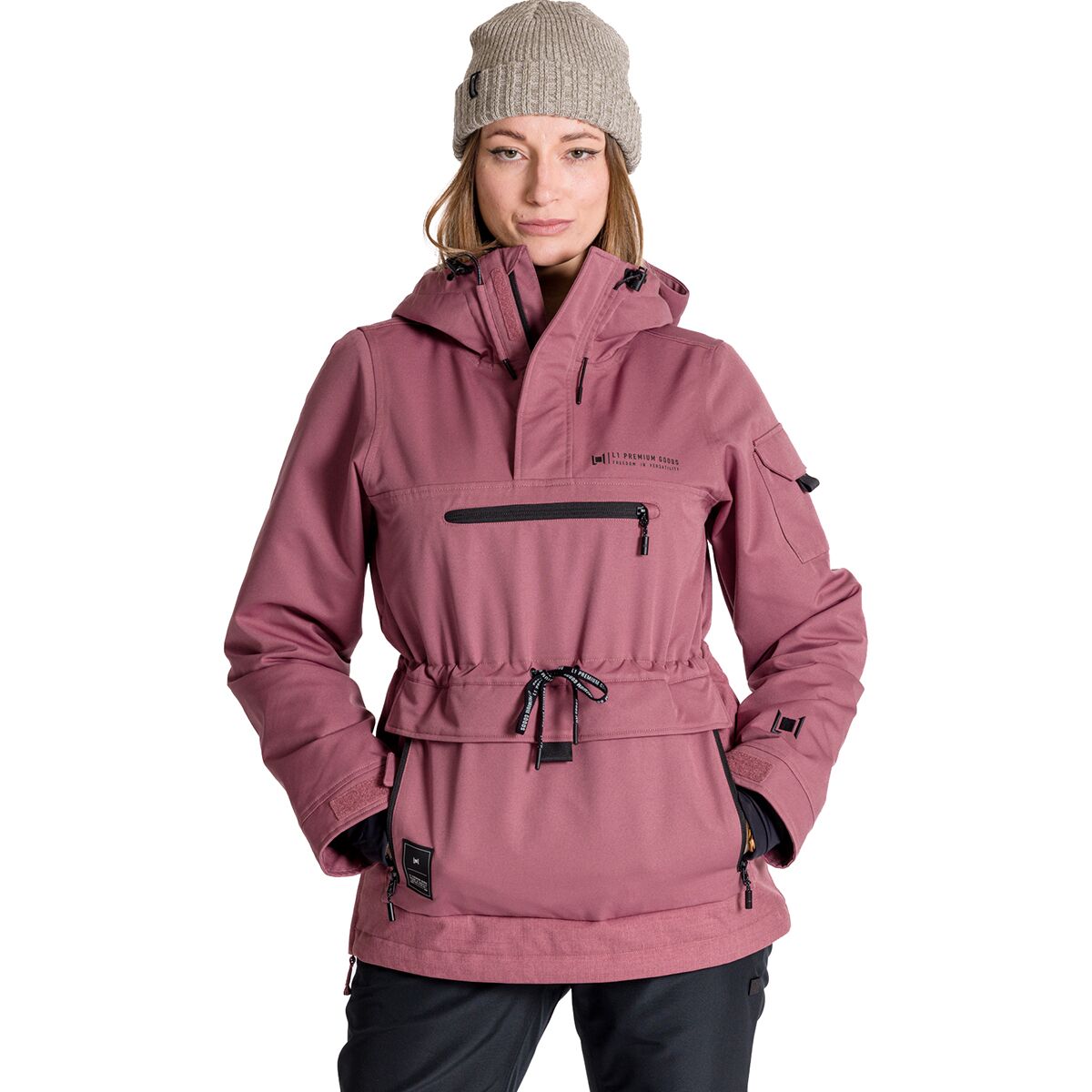
Prowler Jacket - Women's
2 colors
Current price: $121.48 - $134.98 Original price: $269.95
Up to 55% off
Extra 20% Off Clearance | Ends 11/9
Related Categories
Frequently Asked Questions
What design features make L1 outerwear a good choice for freeride and backcountry snowboarding?
L1 pieces prioritize articulated patterns, pre-shaped elbows and knees, and strategic reinforcements to maximize mobility and durability in deep snow and variable terrain. Many jackets and bibs include helmet-compatible hoods, powder skirts, pit zips for ventilation, and laminated shells with durable water-repellent (DWR) finishes to balance weather protection and breathability.How should I size an L1 jacket or bib if I plan to tour with a midlayer and a puffy insulated layer?
Use L1’s size chart as your starting point and pick a size that allows a slim-to-athletic fit with room for a base layer and a lightweight insulating midlayer; an extra layer like a puffy should not restrict your range of motion. Look for sleeve and torso measurements and articulated patterns—if you frequently wear heavy insulation or need full mobility for long climbs, consider one size up.When would I choose an insulated L1 jacket like the Ruckus Jacket versus a shell, and how do they perform differently?
An insulated model like the Ruckus Jacket gives immediate warmth and packability for cold, lower-activity days or quick laps where you don’t want to fuss with layering, while a shell prioritizes weather protection and ventilation for high-output touring and variable conditions. Shells pair with synthetic or RDS down midlayers so you can adjust warmth on the move; insulated jackets are simpler but less flexible across temperature swings.What’s the best way to care for L1 down and DWR-treated outerwear to keep waterproofing and loft working well?
Wash technical outerwear with a purpose-made technical detergent, avoid fabric softeners, and follow the garment’s wash tags; for down, tumble dry with clean dryer balls on low heat to help restore loft. When DWR performance drops, treat the shell with a spray-on or wash-in DWR product and heat-activate if the care instructions allow, and always store garments dry and uncompressed.