


Up To 70% Off Black Friday Sale
More brands added | Shop now
20% Off Full-Price Items
Shop now
Camp & Travel Up To 70% Off
Daily deal! Shop now
Rumpl Hike & Camp
11 results


Rumpl
Travel Puffy Blanket
3 colors
$89.95
Discount Applies In Cart
(42)

Rumpl
National Park Original Puffy 1-Person Blanket
5 colors
$99.95
Discount Applies In Cart
(24)


Rumpl
Backcountry Puffy 1-Person Blanket
2 colors
$149.95
Discount Applies In Cart
(18)

+2
Rumpl
Original Puffy Printed 1-Person Blanket
6 colors
$99.95 - $129.95
Discount Applies In Cart
(186)

Rumpl
Fleece Puffy 1-Person Blanket
4 colors
$139.95
Discount Applies In Cart
(13)

Rumpl
The Campfire Puffy Blanket - 1P
2 colors
$149.95
Discount Applies In Cart
(1)

Rumpl
Original Puffy Solid 2-Person Blanket
2 colors
$199.95
Discount Applies In Cart
(323)

Rumpl
Original Puffy 1-Person Blanket - Bandana
2 colors
$99.95
Discount Applies In Cart
(3)

Rumpl
The Original Puffy Blanket - Retro Stripes
2 colors
$199.95
Discount Applies In Cart
(4)

Rumpl
Backcountry Puffy 2-Person Blanket
2 colors
$249.95
Discount Applies In Cart
(10)

Rumpl
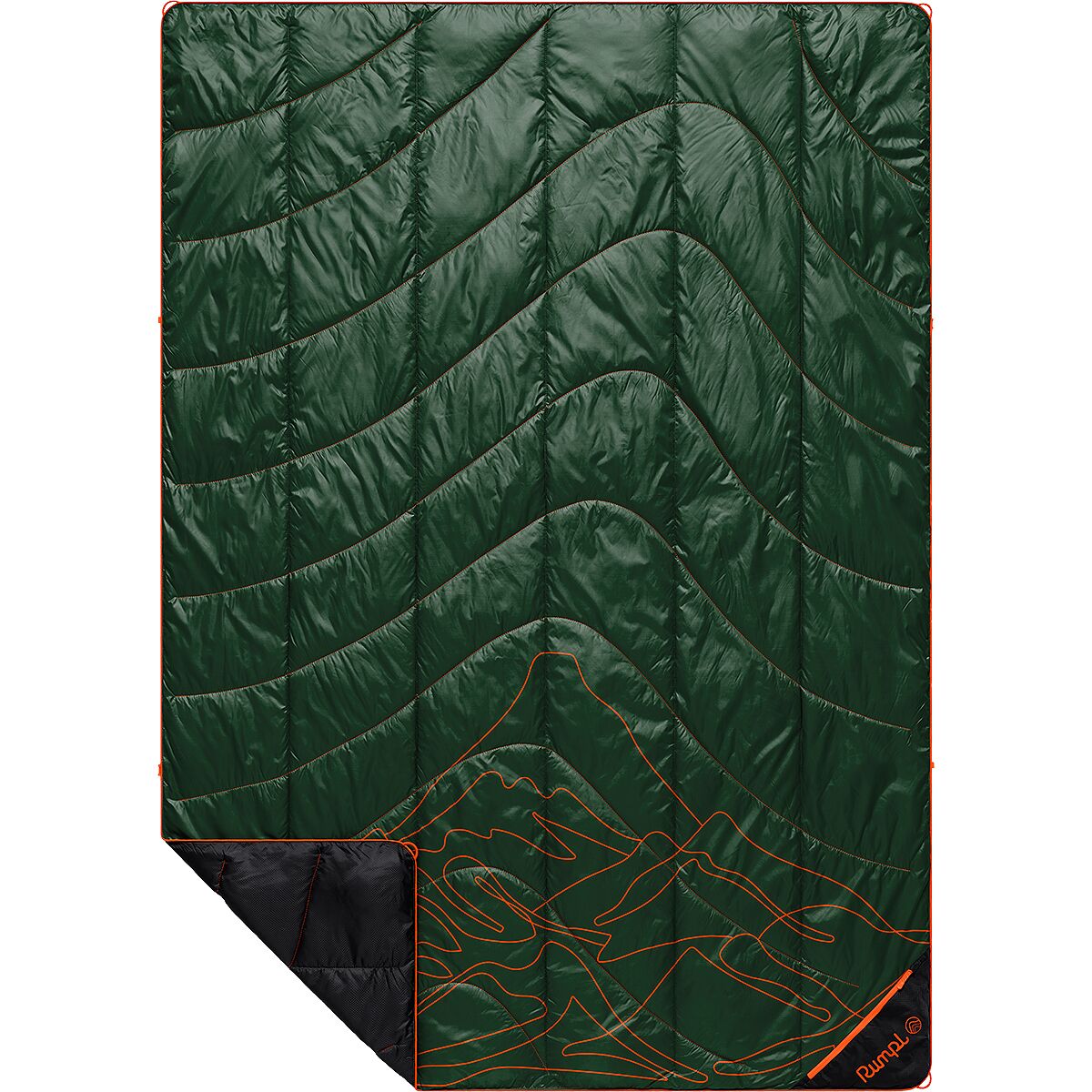
The Original Puffy Blanket - Seascape Ridge Mountains
1 color
$199.95
Discount Applies In Cart
(2)
Related Categories
Frequently Asked Questions
Which Rumpl puffy blanket is best for backpacking, camping, or overlanding?
Choose by activity: the Down Puffy is the lightest and most packable for weight-conscious backpacking thanks to 600‑fill hydrophobic down, NanoLoft gives the best synthetic warmth-to-weight for cold/wet conditions, the Backcountry Puffy uses beefier 240gsm construction and a tougher ripstop shell for overlanding and basecamp abuse, and the Original Puffy is the most versatile, plush option for campfire lounging and general use. All models compress but still pack larger than ultralight sleeping quilts (roughly a 6" x 14" stuff sack), so test fit in your daypack if space is limited.How do the Original Puffy, Backcountry Puffy, NanoLoft, and Down Puffy differ?
The Original Puffy uses a 240gsm 3D hollow synthetic fill and a soft recycled ripstop shell for everyday warmth and comfort, while the Backcountry Puffy keeps similar synthetic fill but a more rugged 30D–50D ripstop shell and updated loft/packability (about 20% warmer/more packable vs earlier models). NanoLoft employs a high-performance synthetic insulation that prioritizes warmth in damp conditions, and the Down Puffy uses 600‑fill hydrophobic down for the best warmth-to-weight ratio. Pick Original for plush versatility, Backcountry for durability, NanoLoft for wet-weather synthetic warmth, and Down Puffy for ultralight warmth.What insulation and shell materials do Rumpl puffy blankets use, and how do they perform when wet?
Most Rumpl models use a recycled ripstop nylon shell (VersaWeave™ or similar 30D–50D fabrics) with a DWR treatment and either 240gsm 3D hollow synthetic fill or performance synthetic NanoLoft; the Down Puffy uses 600‑fill hydrophobic down. Synthetic fills retain more loft and insulating ability when damp, while hydrophobic down resists moisture better than untreated down but still benefits from shelter. The shells shed light moisture and dirt well, but none are fully waterproof in prolonged heavy rain.How do I choose the right size and fit for a Rumpl blanket?
Choose Junior for kids, 1‑Person (about 75" x 52") if you plan to wrap up solo or use it as a sleeping-bag topper, and 2‑Person (around 84" x 80") for sharing or full-coverage camp use; 1‑Person weighs roughly 1 lb 10 oz to 2 lb 1.6 oz depending on model, and 2‑Person versions are heavier (~3 lb 13 oz). Consider whether you want to wear it with the Cape Clip (opt for a size that allows layering and movement) and remember that larger sizes pack bulkier, so match size to your group and pack space.Can I wear a Rumpl blanket hands-free and stake it down at camp?
Yes, most Rumpl blankets include a Cape Clip for poncho-style, hands-free wear and corner staking loops to secure the blanket to the ground; the Cape Clip makes it easy to move around but the plastic clasps can be fiddly in very cold conditions. Use the staking loops to anchor the blanket for picnics or windy campsites, and pair with a tarp or shelter in heavy precipitation since the shell is water-repellent but not fully waterproof.