


20% Off Full-Price Items
Shop now
EXTRA 20% Off Clearance
Shop now | Ends 11/9
Get An EXTRA $50 Cash Back*
Summit+ exclusive
LEKI Climb
36 results


LEKI
Ultratrail FX One Trekking Poles
2 colors
Discount Applies In Cart | Ends 11/16
(2)


LEKI
Ultratrail FX 1 Superlite Trekking Poles
2 colors
(1)

LEKI
Tyton Pro TR Glove
2 colors
Discount Applies In Cart | Ends 11/16

LEKI
Makalu FX Carbon AS Trekking Poles
1 color
Discount Applies In Cart | Ends 11/16

LEKI
Skytera FX Carbon SL Trekking Poles
1 color
Discount Applies In Cart | Ends 11/16

LEKI
Makalu FX Carbon AS Trekking Poles - Compact
1 color
Discount Applies In Cart | Ends 11/16
(3)

LEKI
Cross Trail FX 1 Superlite Trekking Poles
1 color
Discount Applies In Cart | Ends 11/16

LEKI
Tyton TR Lobster Glove
1 color
Discount Applies In Cart | Ends 11/16

LEKI
Wanderfreund High Fives Trekking Pole
1 color
Discount Applies In Cart | Ends 11/16
(3)

LEKI
Griffin Prime 3D Glove
1 color
Discount Applies In Cart | Ends 11/16

LEKI
Makalu Pro FX Carbon Trekking Poles
1 color
Discount Applies In Cart | Ends 11/16
(1)

LEKI
Makalu FX Carbon Trekking Poles
1 color
Discount Applies In Cart | Ends 11/16
(1)

LEKI
Skysolo FX One Carbon Trekking Poles
1 color
Discount Applies In Cart | Ends 11/16

LEKI
Khumbu Lite Trekking Poles - Compact
1 color
Discount Applies In Cart | Ends 11/16

LEKI
Griffin Base 3D Glove
1 color
Discount Applies In Cart | Ends 11/16

LEKI
Skysolo Trekking Poles
1 color
Discount Applies In Cart | Ends 11/16

LEKI
Trigger 3 NW Shark Strap
1 color
Discount Applies In Cart | Ends 11/16

LEKI
Traveller Carbon Trekking Poles
1 color
Discount Applies In Cart | Ends 11/16

LEKI
Makalu Cork Lite Compact Trekking Poles
1 color
Discount Applies In Cart | Ends 11/16

LEKI
Legacy Lite Trekking Poles
1 color
Discount Applies In Cart | Ends 11/16
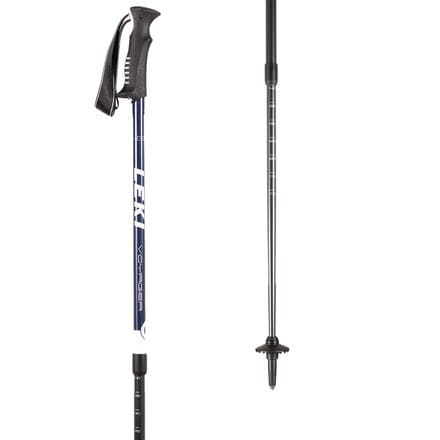
LEKI
Voyager Trekking Poles
1 color
Discount Applies In Cart | Ends 11/16
(1)

LEKI
Ultratrail FX 1 Superlite Trekking Poles
1 color
Winter Sale
(3)

LEKI
Spin Shark SL Nordic Walking Poles
1 color
Discount Applies In Cart | Ends 11/16

LEKI
Traveller Aluminum Trekking Poles
1 color
Discount Applies In Cart | Ends 11/16

LEKI
Makalu Trekking Poles
1 color
Discount Applies In Cart | Ends 11/16

LEKI
Instructor Lite Speedlock 2 Trekking Poles
1 color
Discount Applies In Cart | Ends 11/16
(1)

LEKI
Wanderfreund Makalu Trekking Pole
1 color
Discount Applies In Cart | Ends 11/16
(3)

LEKI
Legend Black Carbon Trekking Pole
1 color
Discount Applies In Cart | Ends 11/16

LEKI
Skytera FX Carbon SL Compact Trekking Poles
1 color
Discount Applies In Cart | Ends 11/16
(1)

LEKI
Universal Flex Tips - 1 Pair
1 color
Discount Applies In Cart | Ends 11/16

LEKI
Skyterra Lite Trekking Poles - Compact
1 color
Discount Applies In Cart | Ends 11/16

LEKI
Skysolo FX Carbon Trekking Poles - Compact
1 color
Discount Applies In Cart | Ends 11/16

LEKI
Legacy Lite Pro Trekking Poles
1 color
Discount Applies In Cart | Ends 11/16

LEKI
Cross Trail FX Superlite Trekking Poles - Compact
1 color
Discount Applies In Cart | Ends 11/16

LEKI
Vertical K Trekking Poles
1 color
Winter Sale

LEKI
Cross Trail FX 1 Superlite Trekking Poles
1 color
Winter Sale
Related Categories

Frequently Asked Questions
Which LEKI poles should I choose if I want ultralight performance versus maximum durability?
For the lightest setups pick carbon models like the Black Series FX Carbon or Ultratrail FX.One, which use HRC/100% carbon shafts for minimal weight and quick swing. If durability and impact resistance matter more, choose aluminum or mixed-shaft options such as the Makalu Cork Lite or Corklite, which trade a bit of weight for greater toughness on rock and heavy pack loads. Consider how often you’ll be packing, scrambling, or using them with poles hard on rock when deciding between the two materials.How do I size and adjust LEKI trekking poles for steep climbs and descents?
Set pole length so your elbow forms roughly a 90-degree angle on flat terrain, then shorten by 5–10 cm for steep uphills and lengthen slightly for descents; most LEKI Speed Lock telescopic poles adjust across a wide range (commonly 110–150 cm) to accommodate that. Use Speed Lock 2 Plus for quick, glove-friendly micrometric adjustment on the trail, and check strap fit—Aergon or Trigger systems should support wrist engagement without cutting circulation. Re-check tightness after a few minutes of use to prevent slippage on steep or wet terrain.What are the benefits of foldable (Z-pole/3‑section) LEKI designs versus traditional telescoping poles?
Foldable 3‑section or Z‑pole designs like many Ultratrail and FX models pack down to ~16–36 cm for easy stowage in a pack or for travel, and they deploy faster for quick transitions. Telescopic poles with Speed Lock give infinite length adjustment for fine-tuning on varied slopes, making them better where frequent height changes are needed. Choose foldable if packability and quick deployment are priorities, and telescoping if you value on-the-fly length adjustments and heavy-duty clamping.Which LEKI grip materials work best for sweaty or wet conditions?
Cork grips (found on models like Makalu Cork Lite and Corklite) wick moisture and conform to the hand over long efforts, while foam/Trail Shark grips stay light and maintain traction through wet conditions thanks to air-channel designs. Rubberized or textured Aergon heads give extra downhill control in slippery terrain; try the grip style on a long loop to see which maintains comfort and control for your sweat profile.How much knee/hand protection do LEKI anti‑shock systems provide on technical descents?
LEKI DSS anti‑shock and AS variants (for example, Cressida FX Carbon AS and Legacy Lite AS) use internal suspension to reduce impact transmitted to joints, with many designs advertising significant reduction in peak shock compared with a rigid shaft. These systems soften repeated heel-strike impacts on long descents, which can reduce fatigue and vibration felt in the hands and wrists, though they add a small amount of weight and slightly different pole feedback. For very steep, technical terrain where maximum precision is needed you may prefer a stiffer, non‑damped pole; for long downhill mileage the AS/DSS models are usually more comfortable.